For trail runners, public lands are the daily dirt loop outside town, the long ridge run after work, the desert wash scramble that becomes runnable in the cool months, and the race course that brings a community together for a weekend. They are where we train, volunteer, race, gather, and experience the health of public lands directly.
That is why Runners for Public Lands opposed the Bureau of Land Management’s (BLM) proposal to rescind the Conservation and Landscape Health Rule, often referred to as the Public Lands Rule or “PLR.” And it is why we are disappointed that BLM has now finalized the rescission of the 2024 rule, effective June 11, 2026. The final rule eliminates BLM’s framework for treating conservation and restoration as integral parts of public land management, including restoration and mitigation leasing, land health standards, and updated direction for Areas of Critical Environmental Concern. For runners, race directors, rural communities, and others who depend on intact public lands, the rescission removes useful tools for proactive stewardship at a time when those tools are increasingly needed.
BLM manages roughly 245 million acres of public land—more than any other federal agency—and much of this is in the West. These include a long list of landscapes where trail runners train, explore, and race, such as Black Canyon National Recreation Trail in Arizona; the Kokopelli and Mack Ridge-area trails near Fruita and Loma, Colorado; the Continental Divide Trail corridor near Cuba, New Mexico; the public lands around Bishop, California; the Crooked River and Gray Butte landscapes near Smith Rock, Oregon; and the canyon and slickrock routes around Moab, Utah. These routes are not just lines on a map. They are recreation infrastructure, community assets, and the foundation for many organized trail events.
What the PLR Rescission Means
The Public Lands Rule mattered because not only did it recognize that healthy land is the foundation of durable access, but it did so for BLM lands that have relatively low levels of permanent protection from extractive activities like oil and gas drilling and mining. Stable soils, intact native vegetation, functioning watersheds, clean air, connected habitat, and scenic quality all affect whether a trail remains runnable over time. When those systems are degraded, impacts show up quickly. Dust increases. Trails erode. Washes blow out. Increased fire activity from climate change, the spread of invasive plants, and land degradation can result in extra smoke and post-fire flooding that reduce safe recreation days. Race directors face reroutes, uncertain permit conditions, higher costs, or cancellations. Rural communities lose predictable visitation. Rescinding the PLR discards useful tools for safeguarding ecological integrity, recreational access, and community well-being while making it harder for BLM to manage long-term public values alongside short-term uses. The rule also gave BLM field offices a more consistent way to identify and address landscape health issues before they became trail closures, user conflicts, or restoration problems.
This is especially important for organized trail running. Many BLM landscapes provide the open, durable, and flexible public land settings where trail races can occur—settings that may be difficult, limited, or unavailable in designated Wilderness areas or certain national park units. Those events depend on Special Recreation Permits, consistent agency review, and landscapes healthy enough to sustain use while avoiding increased erosion, fragmentation, and restoration needs. The Public Lands Rule helped connect recreation management to measurable land health standards, giving BLM field offices better information to protect trail conditions, manage cumulative impacts, and set clearer expectations for permitted events.
In Moab, Utah, events such as the Behind the Rocks Ultra and Moab Trail Marathon rely on routes through areas like Behind the Rocks, Pritchett Canyon, Amasa Back, and Kane Creek—places defined by slickrock, sandstone cliffs, desert drainages, fragile biological soil crusts, and shallow vegetation. The PLR provided science-based tools that could inform recreation planning and permit conditions related to soil disturbance, dust, visual quality, and ecological integrity. Without those tools, incremental surface disturbance and development pressure become harder to manage in a way that protects the qualities that make Moab’s trail network nationally significant.
The same pattern holds on other well-known BLM trail landscapes across the West, from California’s Lost Coast Trail and Bizz Johnson National Recreation Trail to Oregon’s Rogue River National Recreation Trail, Utah’s Gooseberry Mesa, and the Continental Divide Trail segments crossing BLM lands in New Mexico, Colorado, and Wyoming. Some are race venues, some are everyday training routes, and some are iconic public land trails better known to hikers, bikers, or backpackers—but all depend on stable soils, functioning watersheds, intact scenery, and thoughtful management. The Public Lands Rule gave BLM better tools to manage erosion, off-trail impacts, restoration needs, and landscape health so these trails can remain runnable over time.
What Comes Next
The PLR rescission comes at a difficult moment. Outdoor recreation is growing and public demand for trail access is increasing. Climate impacts are intensifying. BLM field offices are already stretched thin and facing directives to increase certain extractive activities. In that context, the Public Lands Rule did not lock lands away from people. It gave BLM a clearer way to manage for long-term access by preventing degradation that can eventually force closures, reroutes, and conflict.
This decision is a setback for runners who depend on healthy public lands for daily movement and well-being, for race directors trying to operate responsibly in sensitive landscapes, and for gateway communities whose economies are tied to predictable, high-quality outdoor recreation.
But the work continues. Runners can still show up in land use planning processes, support BLM field staff who are managing recreation with limited capacity, volunteer for trail stewardship, and help explain why intact landscapes matter to runners, families, outfitters, local businesses, and communities. Conservation is not the opposite of access. It is one of the conditions that makes lasting access possible.
Public lands are where we run. The rescission of the Public Lands Rule makes RPL’s mission more important: to empower runners to protect public lands and expand access to nature for all.

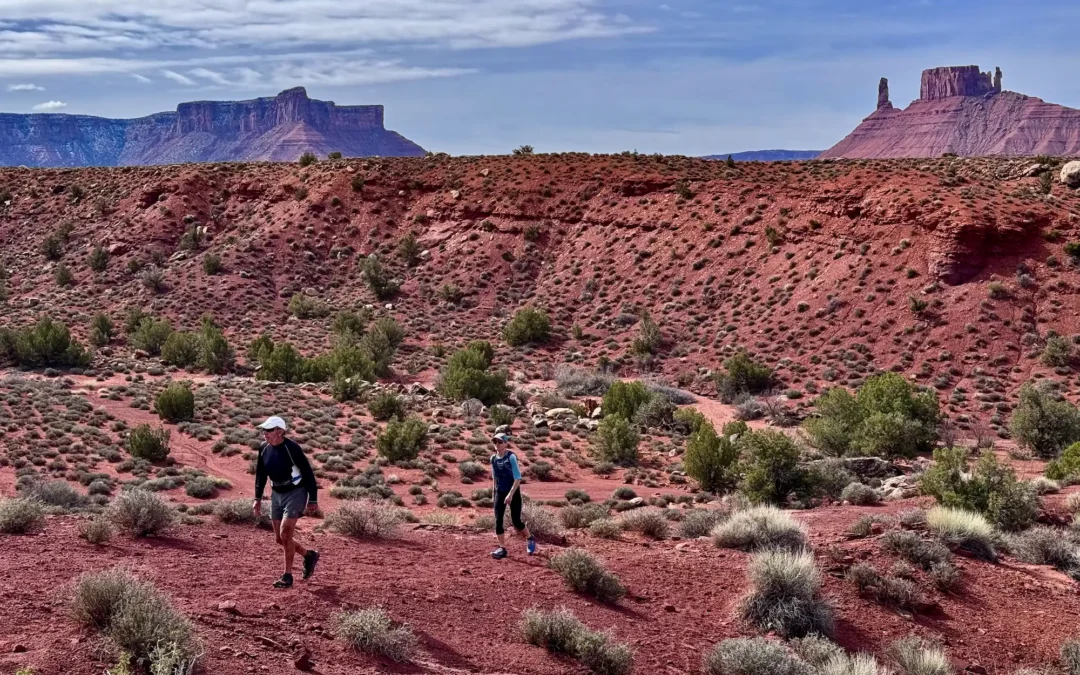
Photos of BLM lands by Jason Keith (featured) and Bob Wick (above).